Answer(s)
• The President (of the United States)

• The President (of the United States)


The principle that elected civilians, not military officers, lead the armed forces.
Refusing to obey orders from a superior.
A permanent military force maintained during peacetime.
DOUGLAS GINSBURG, Federal Judge, U.S. Court of Appeals, D.C. Circuit:
The president is the commander in chief of the armed forces. That is a vital aspect of our republic. It established the principle of civilian control of the military.
The Framers of the Constitution knew the long history of generals seizing control of government – going back to Julius Caesar in ancient Rome. By making the president the commander in chief, the Framers chose one person who can act decisively and be held accountable. Our history has proven their wisdom.
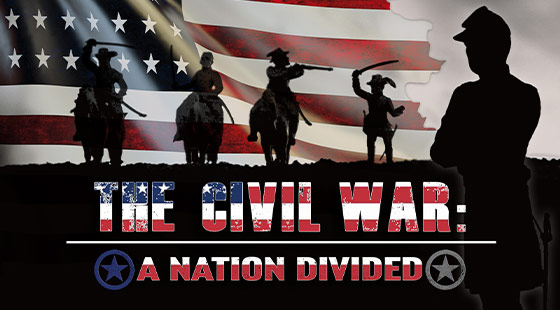
During the second year of the Civil War, a Confederate army surprised Union troops at Shiloh, Tennessee – the bloodiest battle yet of the war. Northern politicians demanded that President Lincoln fire the Union commander, Major General Ulysses S. Grant. Lincoln replied, "I can't spare this man. He fights."
In Virginia, the Confederate Army was outnumbered but unvanquished by the Union Army. Lincoln had gone through six generals before he found one who could do the job: Grant.
When Communist China entered the Korean War, General Douglas MacArthur clashed with President Truman over strategy. MacArthur urged the president to bomb China. Even to consider nuclear weapons. Truman refused – fearing he might trigger World War III. When MacArthur continued to dispute Truman's decision, the president fired him for insubordination.
Much of the public was furious with Truman. MacArthur was a hero of three wars. When he came home, he was invited to address the Congress. But when passions cooled, history judged Truman correct. Generals don’t just give orders. They are also required to follow orders.