Answer
• Communism
• Nuclear war
• Communism
• Nuclear war


A system where government controls the economy and society.
A country's collection of nuclear weapons.
The idea that nuclear war would destroy both sides.
Wall dividing communist East Berlin from free West Berlin.
DOUGLAS GINSBURG, Federal Judge, U.S. Court of Appeals, D.C. Circuit:
The United States had two great concerns during the Cold War: communism, and nuclear war. Throughout the Cold War, most of the world’s major powers built a nuclear arsenal – ready for a hot war between freedom and communism.
But what exactly is communism? The belief in government control: Of industry. Schools. Property. Everything. Russia -- impoverished, war-torn, and starving -- was the first nation to turn to communism.
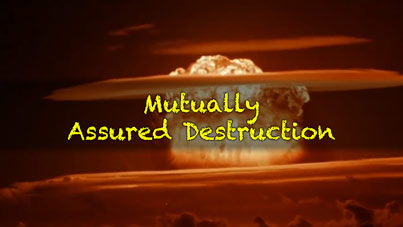
Four years after World War II, a communist army led by Mao Zedong seized power in China – the world’s most populous nation. During the Cold War, more than three dozen nations fell to communism, often by force. Yet nuclear weapons were never used. A nuclear war between the U.S. and USSR would have destroyed both nations. Such a dire prospect spawned a bone-chilling doctrine of deterrence called Mutually Assured Destruction or MAD.
In Eastern Europe, four decades of communism yielded shoddy products, empty shelves, political prisoners, and unrest. The truth was plain: communism just could not compete with freedom. In the autumn of 1989, Poland elected a pro-democracy government.
Two months later, East Germany opened the Berlin Wall – and Berliners tore down that most hated symbol of communism and the Cold War. Within weeks, Eastern Europe had freed itself from communism.
Two years later, the Soviet Union itself collapsed -- and Russia banned the Communist Party. After decades under Soviet rule, fifteen nations regained their independence.
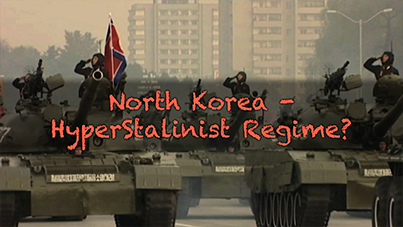
Today, communist rule has shrunk to a few small countries -- Cuba, Laos, Vietnam, North Korea – and to the giant China.