Answer(s)
- Republic
- Constitution-based federal republic
- Representative democracy



A form of government where citizens elect representatives to make decisions on their behalf, rather than voting directly on every issue.
A system where people vote for leaders who then make laws and govern, representing the will of the people.
A system where citizens vote directly on laws and policies themselves, without representatives.
When the majority makes decisions that harm or ignore the rights of minorities, without any protections.
Cruel and oppressive government rule where one person or group has absolute power.
A government that follows a constitution to protect everyone's rights, even when the majority disagrees.
Legal protections ensuring that smaller groups cannot have their freedoms taken away by larger groups.
DOUGLAS GINSBURG, Federal Judge, U.S. Court of Appeals, D.C. Circuit:
The form of the government of the United States is a republic or representative democracy. Some people use republic and democracy to mean the same thing, but they’re different – and the difference matters.
The Greeks pioneered democracy 2,500 years ago. Indeed, the word “democracy” comes from two Greek words meaning “rule by the people.” Athens was governed by an assembly that met about once a week. Any adult male citizen could attend, but in practice only a fraction of the electorate showed up each time – maybe 5,000 men. The Assembly made all decisions and passed all laws by majority vote. Direct democracy.
But democracy carries a risk: mob rule. As the Greek philosopher Plato warned, “Tyranny naturally arises out of democracy.” Why? Because the majority wields power over the minority.
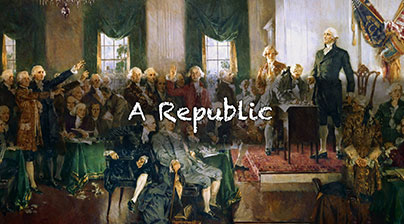
The Founders of our nation embraced democratic ideals but not democracy itself. You won’t find the word “democracy” in the Declaration of Independence or in the Constitution. Instead, the Constitution guarantees “to every State in this Union a Republican Form of Government.”
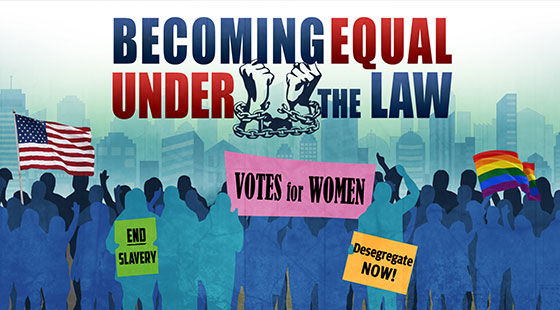
A constitutional republic safeguards the rights of all citizens – despite the passing whims of the majority. Time and again, our republic has thwarted mob rule to protect the rights of an unpopular minority. Outlawing racial segregation in public schools. Striking down laws against interracial marriage. Protecting unpopular speech and unconventional forms of worship.
In the United States, the majority does rule most of the time – but within limits: the safeguards of a constitutional republic ensure that no minority’s rights are trampled by the majority.