Answer(s)
• It says America is free from British control.
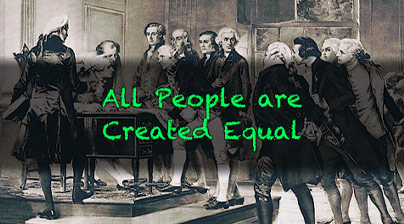
• It says all people are created equal.
• It identifies inherent rights.
• It identifies individual freedoms.



The 1776 document announcing America's freedom from British rule.
Rights that all people are born with, not given by government.
Personal liberties that belong to each person.
British law that prevented colonists from settling western lands.
Being taxed by a government in which you have no voice or vote.
An economic policy where a country controls its colonies' trade for its own benefit.
DOUGLAS GINSBURG, Federal Judge, U.S. Court of Appeals, D.C. Circuit:
The Declaration of Independence is important because it recognized that all people are created equal. It identified inherent rights and individual freedoms. And, of course, it declared America’s freedom from British rule.
In the decades before the American Revolution, the thirteen colonies had fought alongside the British as fellow countrymen. In just twelve years, they became enemies. America’s resentment of British rule ironically sprang from the Anglo-American victory against France during the last of the French and Indian Wars. France ceded to Britain a vast territory from Canada to Florida.
But with the Proclamation of 1763, Britain barred Americans from settling the territory. To guard its new empire, Britain needed troops and ships – and decided the colonists should help pay for it. So the British Parliament levied a series of taxes – on sugar, on tea, on documents from newspapers to wills – even though Parliament had no American members. Hence the protest against taxation without representation.
Britain also controlled American commerce through the Acts of Trade and Navigation, which restricted trade with nations other than Britain – a policy known as mercantilism. Thomas Hutchinson – the royal governor of Massachusetts – summarized the British attitude when he wrote, “There must be an abridgement of so-called English Liberties in America.” Hutchinson was an American but he misread his countrymen. Continental America had outgrown rule by a distant island nation.
In 1776, the Declaration of Independence announced to the world that America was free from British control. To achieve freedom, Americans pledged their lives, their fortunes, and their sacred honor.