Answer(s)
• Declaration of Independence
• Articles of Confederation
• Federalist Papers
• Anti-Federalist Papers
• Virginia Declaration of Rights
• Fundamental Orders of Connecticut
• Mayflower Compact
• Iroquois Great Law of Peace
• Declaration of Independence
• Articles of Confederation
• Federalist Papers
• Anti-Federalist Papers
• Virginia Declaration of Rights
• Fundamental Orders of Connecticut
• Mayflower Compact
• Iroquois Great Law of Peace


America's first constitution (1781-1789), which proved too weak to govern effectively.
Essays by Hamilton, Madison, and Jay supporting ratification of the Constitution.
Essays opposing the Constitution, arguing it gave too much power to the federal government.
George Mason's document that influenced the Bill of Rights.
The formal approval process for the Constitution by the states.
DOUGLAS GINSBURG, Federal Judge, U.S. Court of Appeals, D.C. Circuit:
When you think about the documents that influenced the Constitution, the logical place to start is with the birth certificate of the United States: the Declaration of Independence.
The memorable preamble to the Declaration spells out the basis of the Constitution – that governments “derive their just powers from the consent of the governed.” And the purpose of government is to secure the rights of the people. That’s precisely why the Constitution begins with “We the People.”
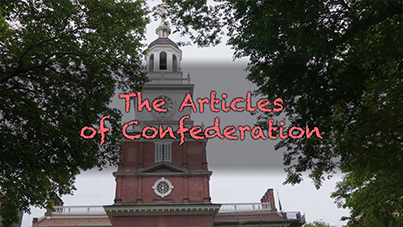
After we declared our independence in 1776, the Congress drafted a document to govern the new nation – the Articles of Confederation. It created a federal government that soon proved too weak – but its flaws led to the convention in the summer of 1787 that produced the Constitution.
Three proponents of the Constitution – Alexander Hamilton, James Madison, and John Jay – wrote a series of essays urging the state legislatures to ratify it. Those essays are among our most important political documents. They’re called the Federalist Papers.
Opponents of the Constitution – including patriot leader Patrick Henry – wrote their own essays known as the Anti-Federalist Papers. The outcome of those arguments was another cornerstone of freedom: The first ten amendments to the Constitution, known as the Bill of Rights, a compromise between Federalists and Anti-Federalists.
The Bill of Rights itself was directly influenced by the Virginia Declaration of Rights, drafted by George Mason, who also helped write the Constitution. You’ll find these and other influential documents in the following list.